
In Conversation With Elena Bellincioni
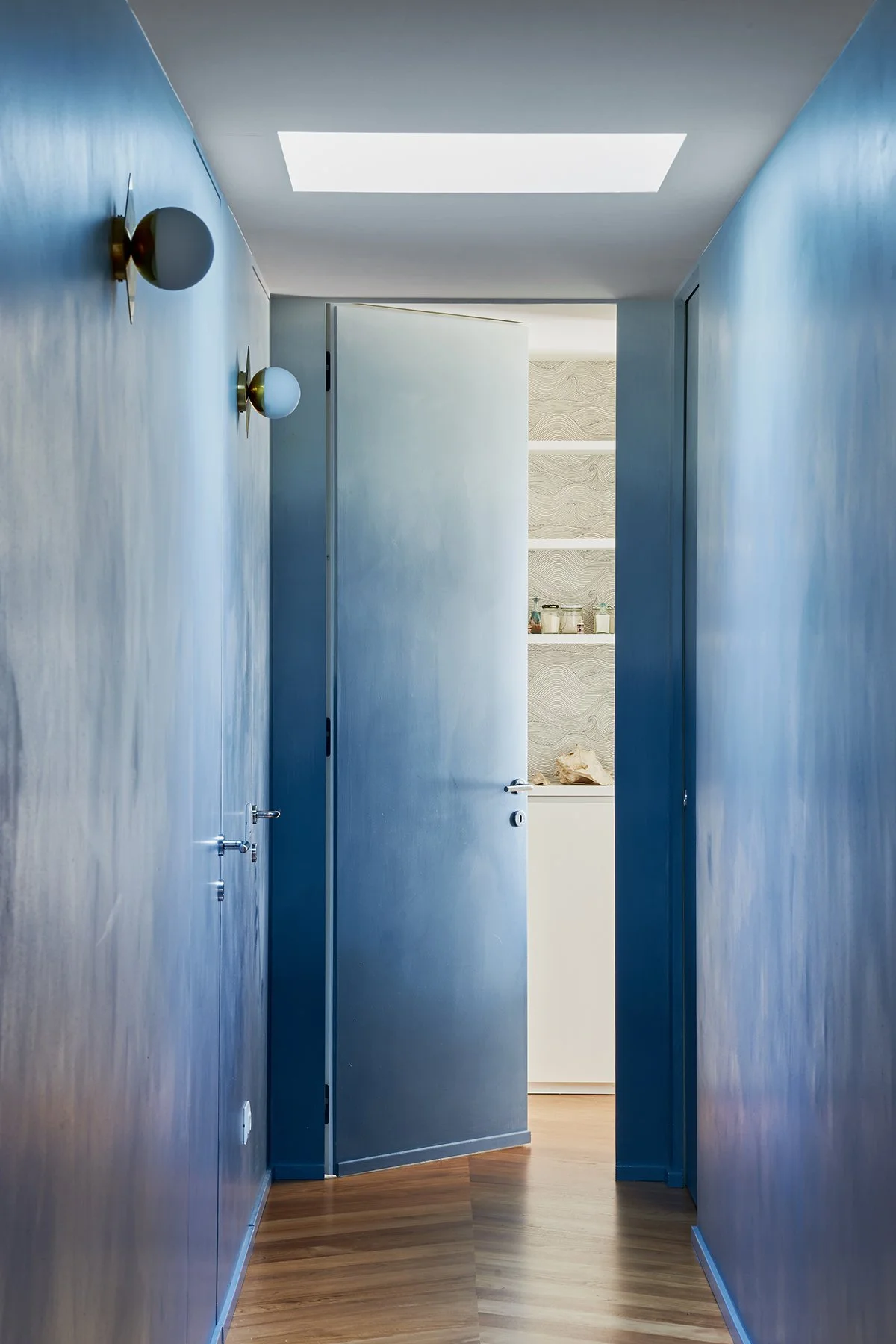
There is a quiet calmness to the interiors of Milan based Italian designer Elena Bellincioni. Trained as an architect, she approaches every home as a story waiting to be told, balancing architecture, natural materials and light with colour and pattern to create timeless and personal spaces. Rather than imposing a signature style, Elena begins by listening to the building itself, preserving its history wherever possible and allowing its character to shape the finished interior.
It's an approach that resonates strongly with our own belief that pattern should do more than decorate a room. Whether she's creating a calm city apartment or a home filled with memories of the sea, Elena uses wallpaper and colour with remarkable sensitivity, bringing warmth, emotion and narrative to every project. We spoke to Elena about the inspiration behind her work, the role of pattern in her interiors and why the stories we surround ourselves with matter just as much as the spaces themselves.
Please tell us a little about your background and how you found your way into interior design.
I trained as an architect, and my childhood dream was to work in set design.
I found that interior design allowed me to combine these two disciplines; I see the home as a kind of stage set for everyday life, one that has the power to influence the well-being and relationships of those who live there.
Your projects have a wonderfully calm, considered quality. How would you describe your approach to creating an interior?
My approach to design stems from the search for a balance between architectural forms, materials, decoration and light.
Where possible, I restore original features, integrating them with the use of wood, stone and natural metals.
I aim to create a contemporary yet welcoming aesthetic, where every element serves a specific purpose in creating comfortable, calm and elegant space, without sacrificing creativity and emotion.
Where do you find inspiration when beginning a new project?
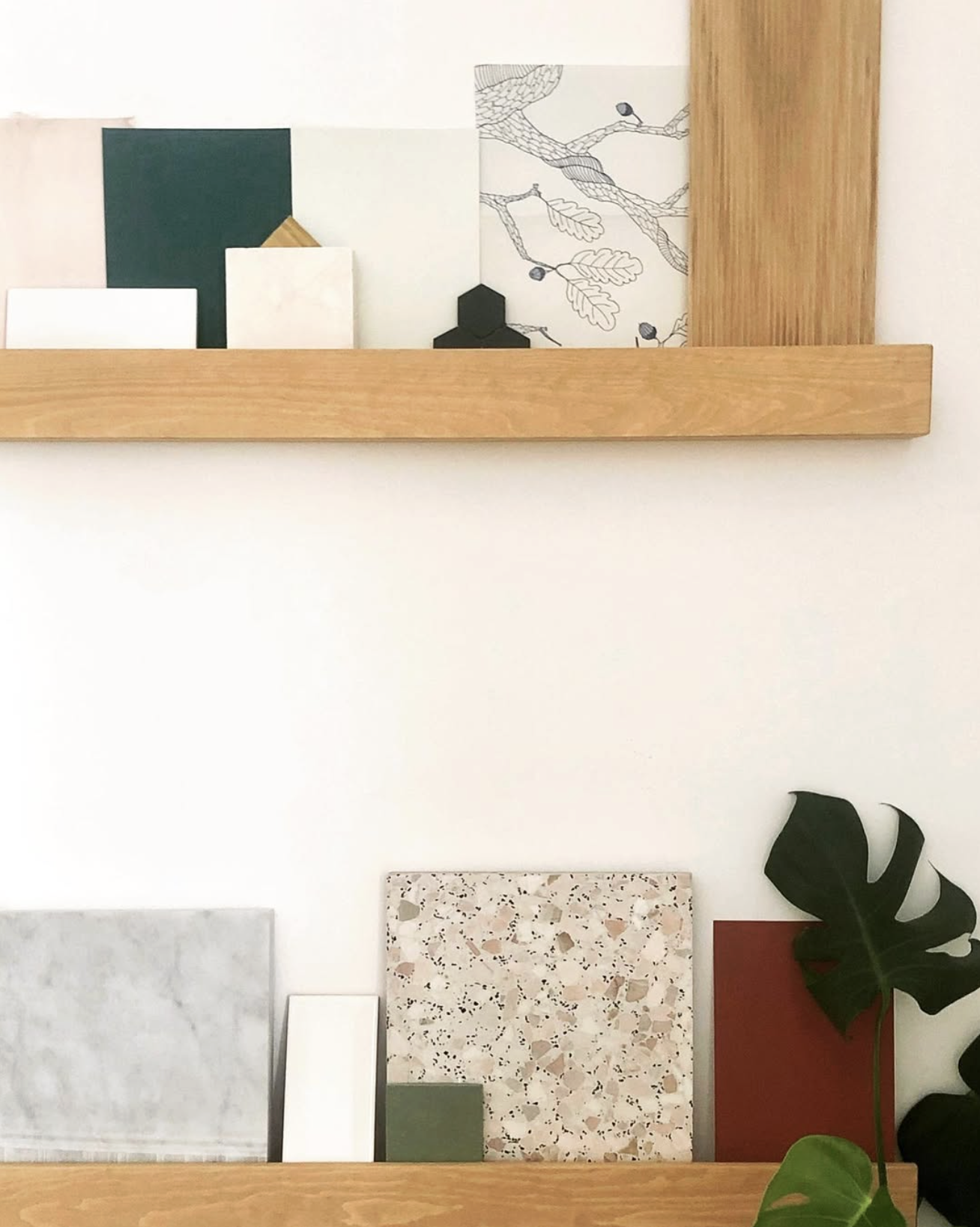
First and foremost, from the intrinsic qualities of the space I’m designing, in its historical elements, if there are any, in its location, in its light, and certainly in the people who will live there. I also find inspiration by observing nature and combinations of materials and colours it offers us.
Pattern is often used with great restraint in your work. What role does it play in the spaces you create?
My interiors are characterized by soft color palettes with carefully balanced color accents, and pattern often serves as a unifying element.
What draws you to a particular wallpaper or pattern when designing a space?
Wallpaper is an immediate and accessible way to enhance the surfaces and color palette of a room, but beyond that, I’m looking for something that can inspire people to dream and stir their emotions. I love the illustrations in Abigail Edwards' collection because they're poetic and delicate; they tell stories on tiptoe, without ever being intrusive.
Many people admire patterned interiors but worry about using them in their own homes. What advice would you give someone taking that first step?
People’s biggest fear is usually getting tired of it. I, on the other hand, believe that a pattern can become a part of you over time. I still remember the wallpaper in my parents’ bedroom when I was a child; I used to spend hours looking at it and seeing imaginary shapes in that pattern, faces and figures created by the intertwining branches…
House F has a wonderfully calm yet characterful atmosphere. Could you tell us about the thinking behind the design?
House F was created through the addition of a new floor to a 1960s building so I had complete freedom in terms of both the layout and the design style.
It is almost entirely surrounded by balconies and terraces which flood the interiors with natural light.
I focused my work on creating a quiet narrative that permeates the home, highlighting its design elements while revealing the spirit of its inhabitants.
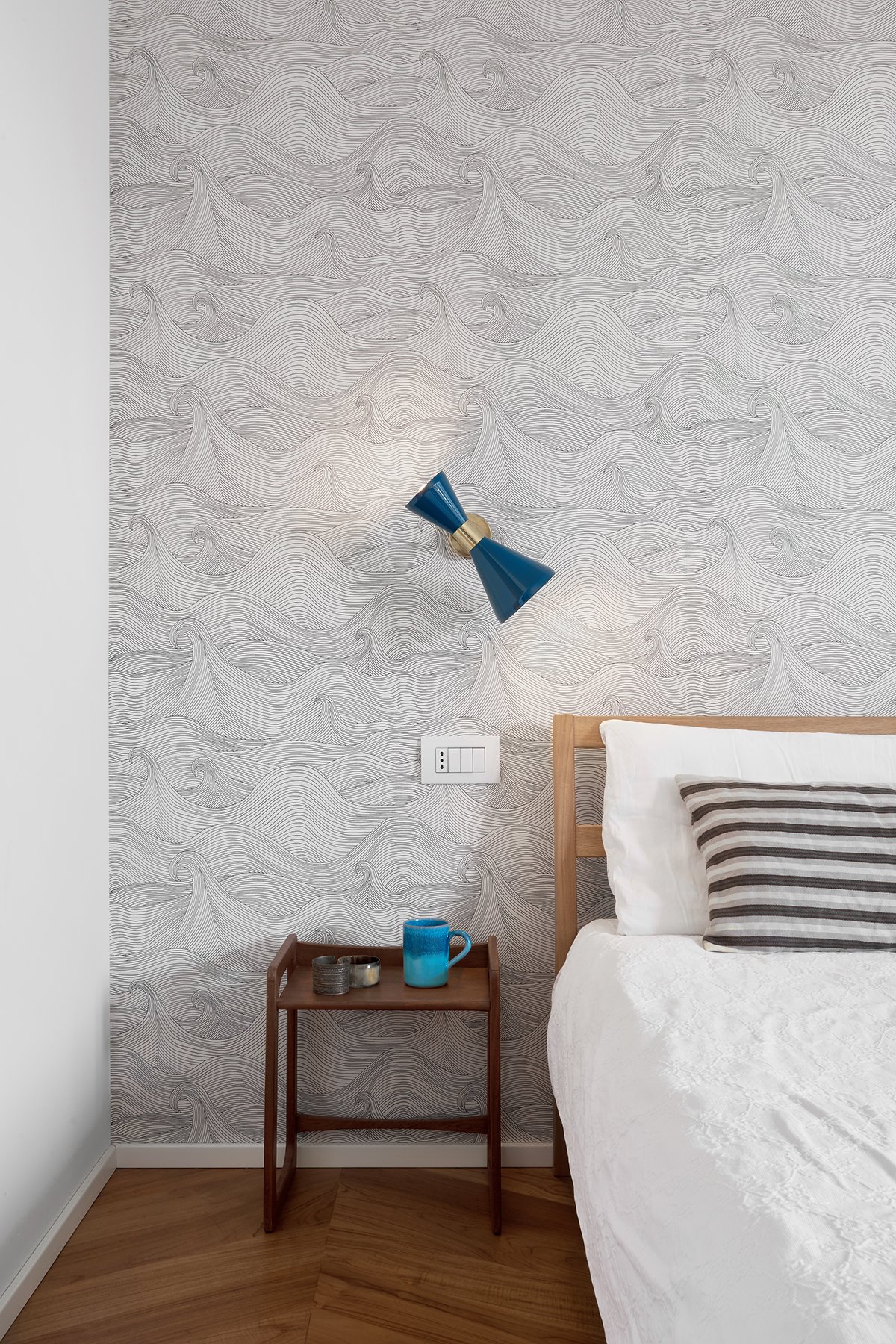
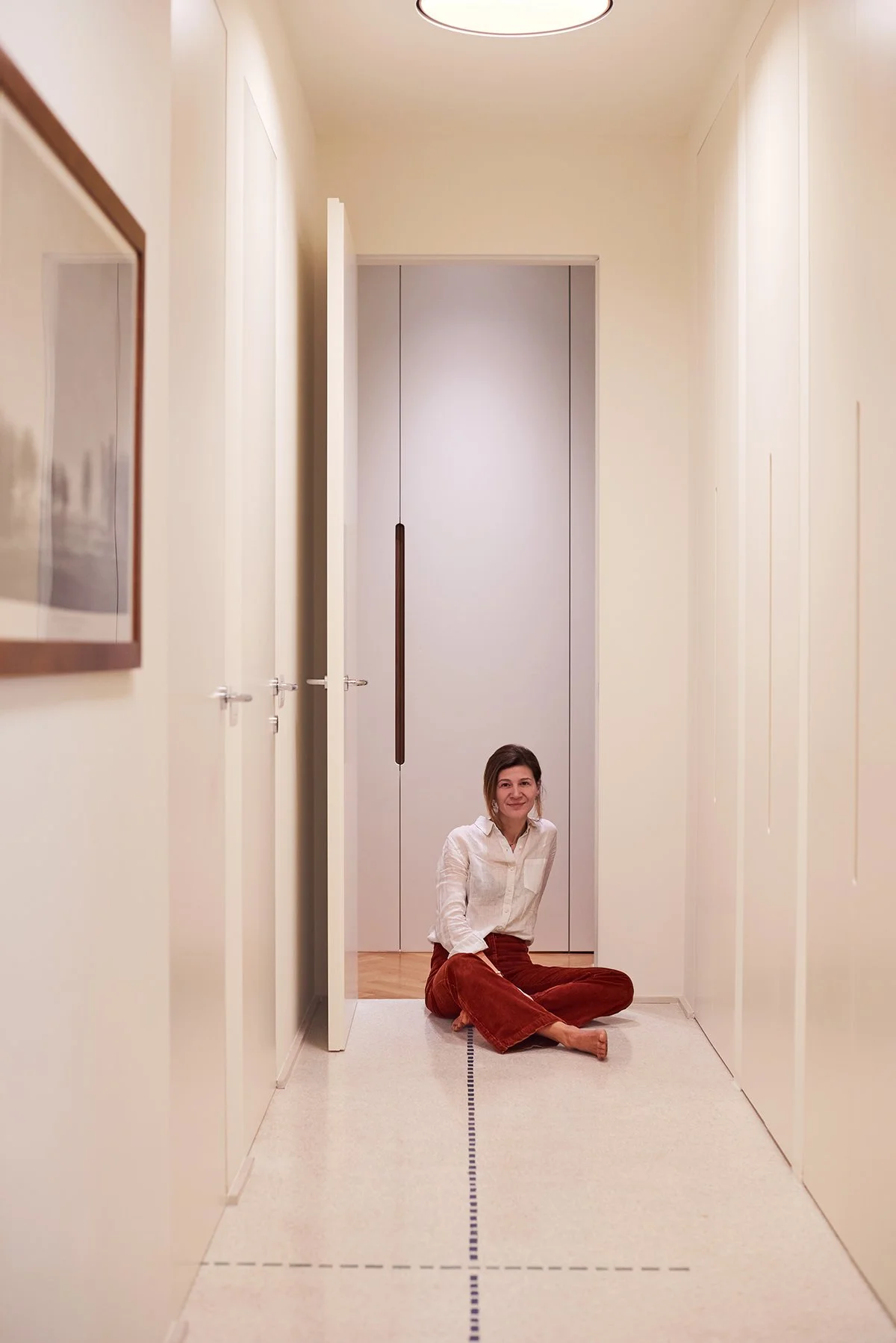
Each area is given its own color. Custom-made, handcrafted cement tiles define the bathrooms and the kitchen, while in the other rooms, we’ve paired natural wood flooring laid in a herringbone pattern with pops of color and decoration on the walls.
What made Seascape the right wallpaper for House F?
Although it’s a city home, the residents of House F have a strong connection to the sea, and we found in Seascape wallpaper the perfect style and color scheme to serve as a backdrop for the warm, vintage furnishings we had chosen.
House A beautifully balances historic character with contemporary colour. What inspired your approach to this project?
House A is located in an early 20th-century building, and there were several historic elements that we wanted to preserve and highlight.
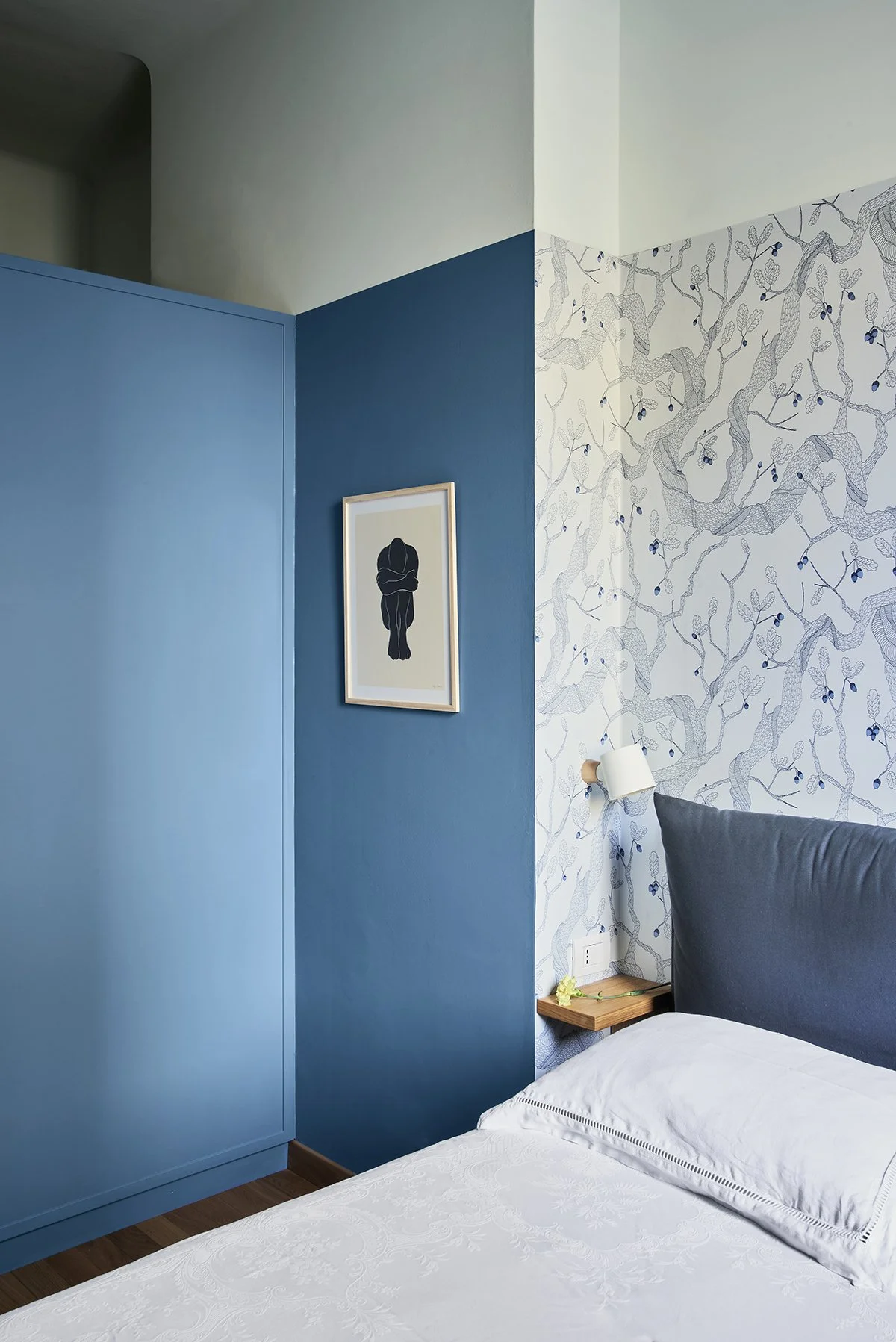
I therefore chose to to create a horizontal division using colour that the furniture and doors do not cross; in this way, the rooms feature two different shades, and the lower part of the walls frames these elements, emphasizing them. The living area walls are painted in a vibrant tea-leaf green paired with a pale pink ceiling, while the sleeping area is in a delicate powder blue with light mint-green ceilings.
What made Oak Tree the perfect choice for the bedroom in House A?
In this house, the bedroom was designed to be a cozy nest and the wonderful design of Oak tree wallpaper is the perfect way to bring that vision to life.
More generally, how can wallpaper influence the mood and atmosphere of an interior?
Wallpaper can be used to envelop a space, if applied continuously around a room, or to highlight the walls or furnishings on which it is placed.
It is therefore necessary to first consider the atmosphere you want to create and the direction in which you want to guide the gaze and draw attention of those moving through the space. For this reason, you should first decide where to place it, and then choose the type.
To see more of Elena Bellincioni’s work click here and for behind the scenes from Elena follow here.
Photography by Max Pescio