
In Conversation With Emily Thurman Studio
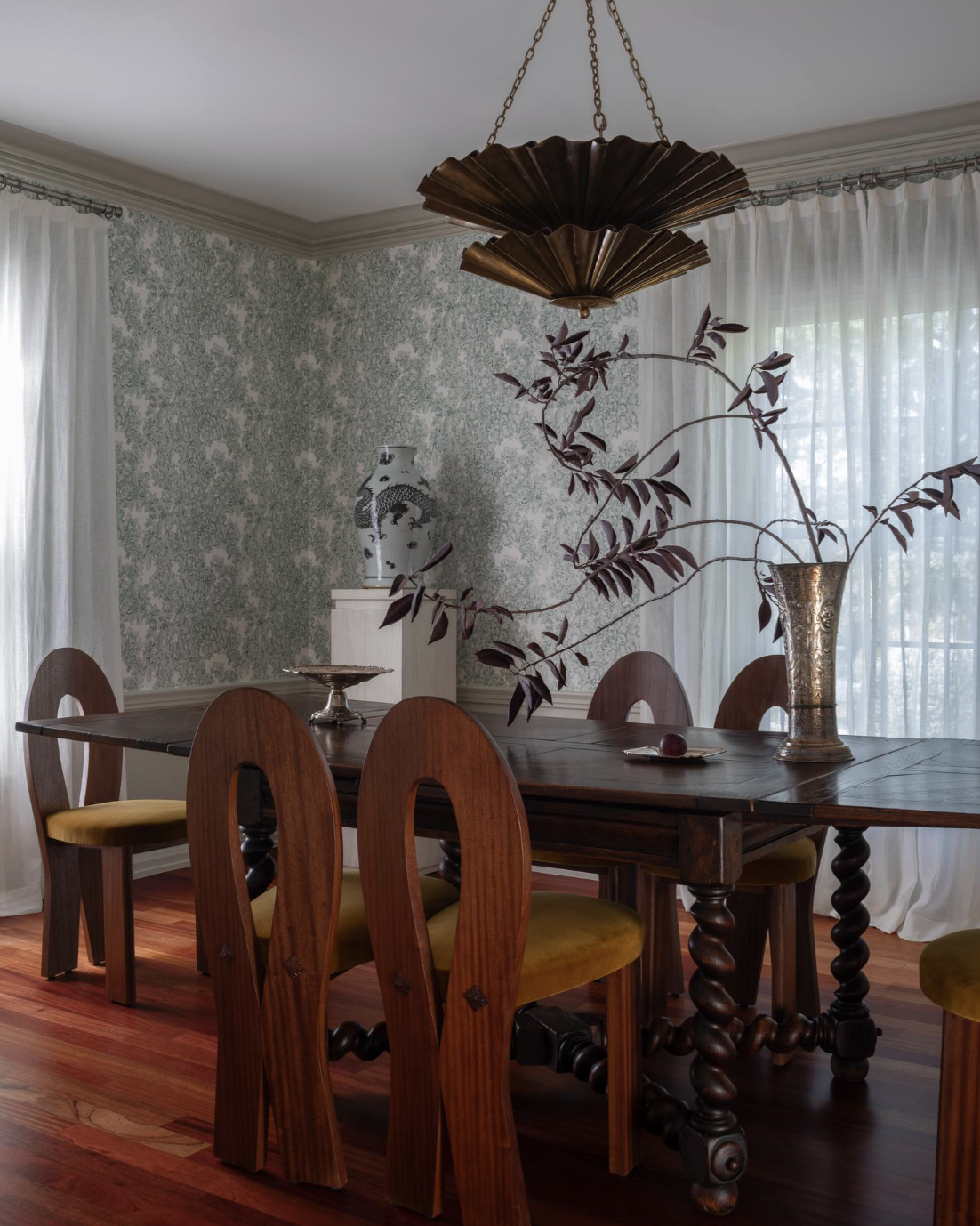
At New York and Salt Lake City based, Emily Thurman Studio, interiors are approached as an evolving dialogue between people, place and story. Drawing on a lifelong connection to design, a deep appreciation for craftsmanship, and a collaborative approach that embraces artists, makers and clients alike, Emily creates homes that feel both highly personal and quietly timeless.
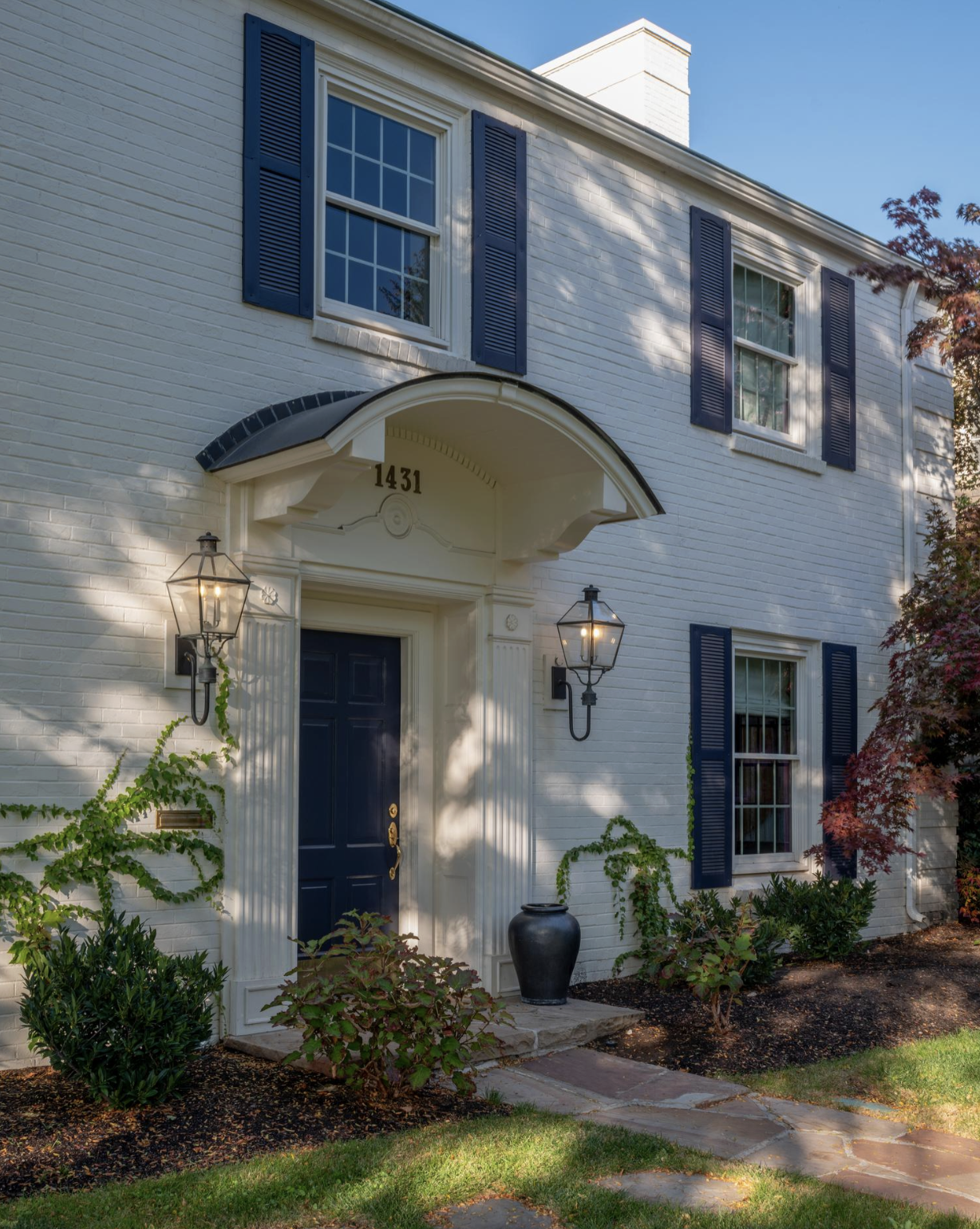
For this project, a 3,300-square-foot Colonial-style home, Emily looked to the client's connection to the Utah desert, weaving subtle references to the landscape throughout the interiors while honouring the home's original 1930s character. Through thoughtful layering, natural materials and carefully chosen custom and vintage pieces, the result is a home that balances refinement with comfort, and individuality with everyday family life.
We spoke with Emily about her creative journey, her design philosophy, and the role that pattern and storytelling play in creating meaningful interiors.
Please tell us a little about your background and how you found your way into interior design?
Design was introduced to me very early through my grandmother, who was both a designer and, in many ways, an artist of her own life. She had an innate understanding of beauty and paid close attention to how spaces could shape experience. From a young age she recognized my curiosity and gave me opportunities to help curate artwork, offer opinions on projects, and participate in the creative process.
I began working for an interior design firm at sixteen and never really stepped away from the field. I later studied both design and business, and along the way I was fortunate to have several mentors who helped shape my perspective and guide my career. Those experiences ultimately led me to establish Emily Thurman Studio in 2023, where my interior design practice and furniture collection have grown alongside one another.
Your work feels both highly curated and personal. How would you describe your design approach?
My work is minimalist in the sense that every object should feel intentional, but maximalist in its embrace of personal history and collected lives. I rarely believe in editing away meaningful possessions simply to achieve a neutral or restrained aesthetic. The most compelling spaces reflect the people who inhabit them.
I am drawn to natural materials and the depth, texture, and honesty they bring to a room. Rather than approaching design as a fixed formula, I see it as an evolving conversation. I prefer to leave room for discovery, allowing projects to develop over time through collaboration with clients, artists, and craftspeople. Commissions and custom work are central to my practice because they create spaces that feel singular and deeply rooted in place. The result is not predictable, but it carries a distinct sensibility.
What sources of inspiration most often shape your projects?
My clients are often my greatest source of inspiration. Understanding how they live, what they value, and the stories they carry provides the insight necessary to create spaces that feel authentic and enduring.
I also spend considerable time working with fabricators and makers throughout Europe, where there is often a more relaxed relationship to design and time. Many interiors have evolved organically over generations rather than being driven by trends. That layered, patient approach resonates deeply with me. The most memorable spaces are often those that have been allowed to grow naturally over time.
Pattern often appears in your work in a thoughtful and intentional way. What role does it play within your interiors?
I use pattern selectively, but when I do, it is usually in service of a larger narrative. Pattern can be a powerful storytelling tool.
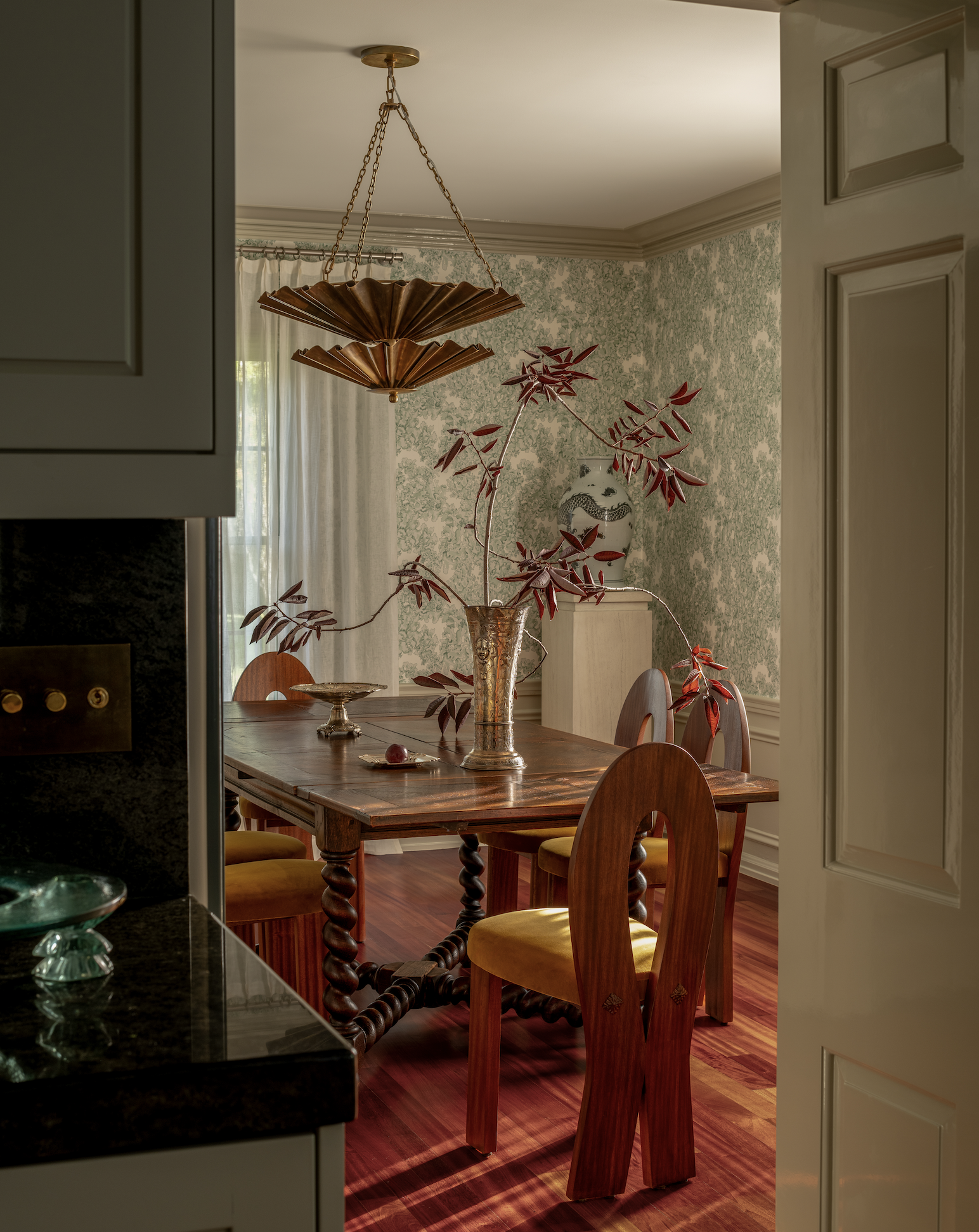
In the case of the Lichen wallpaper, the client spends significant time in Torrey, Utah, where the red rock landscape is often softened by expansive patches of lichen. From the beginning, we wanted to bring subtle references to the desert into her city home. The wallpaper became our most literal gesture toward that landscape, and because it was the only direct reference, it felt particularly meaningful and effective.
When selecting a wallpaper or patterned design, what qualities are most important to you?
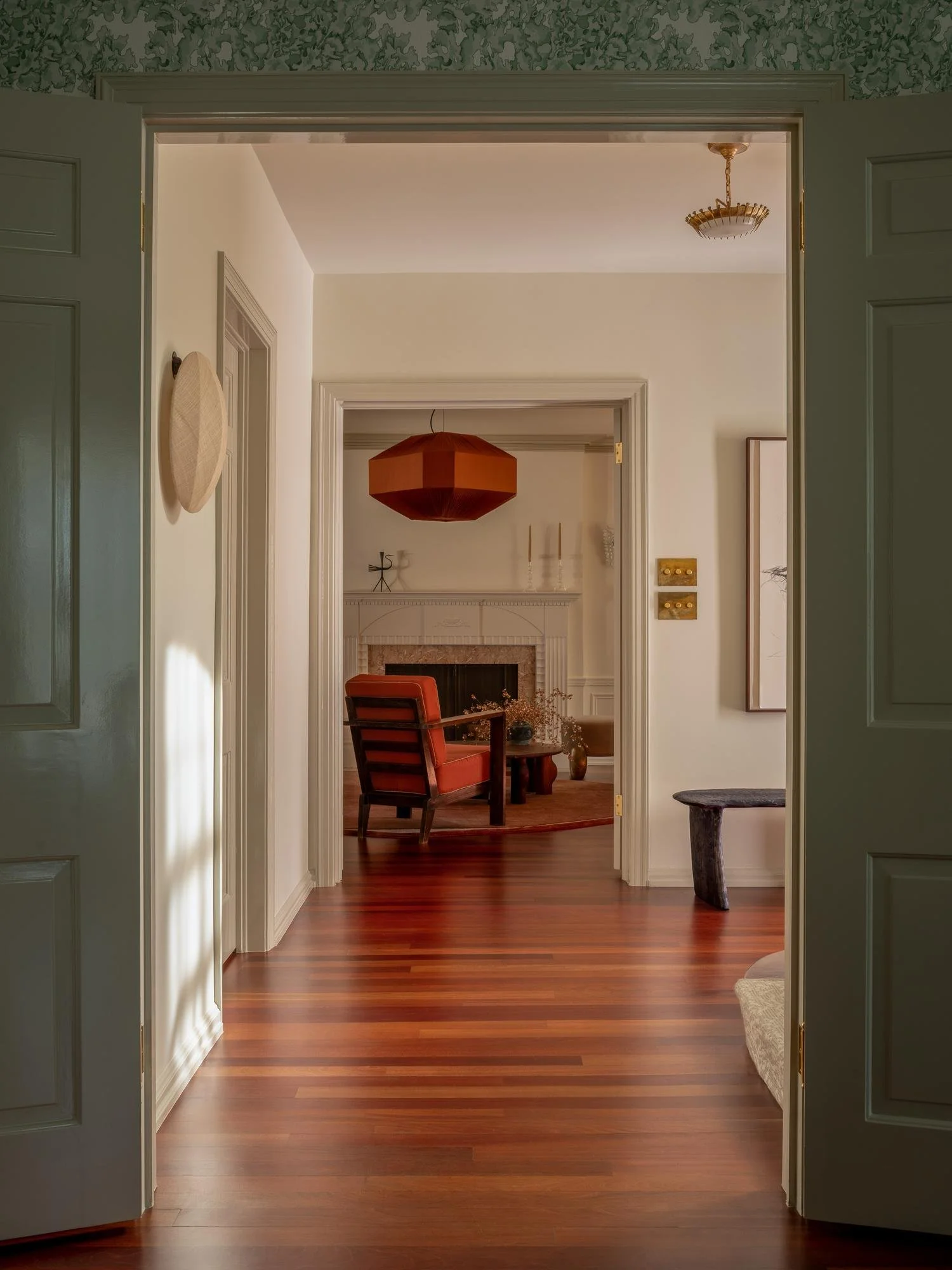
Quality, texture, and colour are always my first considerations. I am interested in materials that reveal their craftsmanship the longer you spend with them.
Recently, I specified a silk moiré wall covering for a powder room, and the way the fibers catch the light creates an almost mesmerising effect. It's the kind of material you can study endlessly. For me, wallpaper should either quietly enrich a room or completely captivate it. There is rarely a middle ground.
Many people are drawn to pattern but feel unsure about incorporating it into their homes. What advice would you give them?
I understand that hesitation because I am also quite deliberate when it comes to pattern. My advice is to begin with the story you want the space to tell. When a pattern feels connected to a place, memory, or idea, it tends to feel much more natural and timeless.
It's also important to allow pattern to have a clear role within the room. Give it the opportunity to be the hero rather than competing with too many other strong gestures.
This project feels very grounded yet rich in narrative. What was the inspiration behind the design?
The project was deeply informed by the Utah desert, its colors, textures, and materials We wanted the home to feel grounded and comfortable, while still allowing moments of unexpected richness and colour to emerge throughout the space.
What drew you to Lichen wallpaper for this scheme?
The wallpaper served as our most direct reference to the desert landscape, but it also felt deeply personal to the client. Interestingly, it was one of those rare moments when a client introduced me to something she had discovered and immediately connected with.
She originally envisioned using it in a smaller room, but as we developed the design it became clear that the pattern deserved a more prominent placement. Giving it space to breathe within a larger common area allowed it to become a defining element of the home.
How did the wallpaper help shape the overall atmosphere and design direction of the room?
The wallpaper became the focal point of the entire room. Once it was selected, every other element took on a more grounding role.
We chose a dark wood dining table and moss-green seating to support the palette without competing with it. In many ways, we treated the wallpaper as the artwork itself and allowed it to carry the visual narrative of the space.
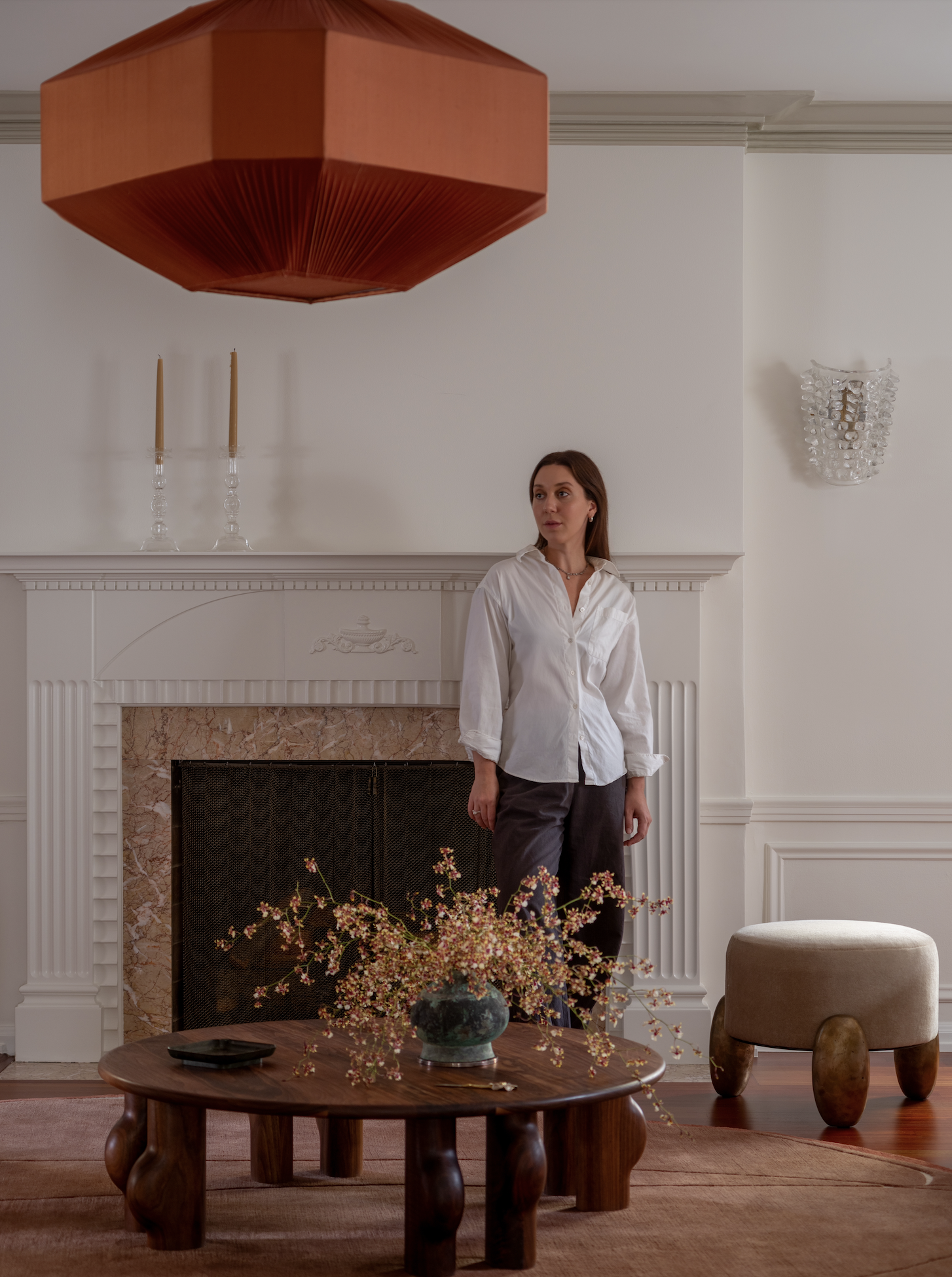
Emily Thurman
Throughout your work there is a strong sense of authenticity and individuality. What are your thoughts on creating a home with character?
Whenever possible, take an authentic approach. If there is a material, pattern, or object that genuinely speaks to you, find a place for it.
Wallpaper can achieve something paint simply cannot. It introduces depth, texture, and story. I often encourage clients to think of wallpaper not as decoration, but as art. When used thoughtfully, it can become one of the most memorable and defining elements of a home.
Emily's work is a reminder that the most memorable interiors are rarely built around trends. Instead, they emerge through careful observation, meaningful collaboration and a willingness to allow a home to evolve over time. By grounding each project in personal narrative and a strong sense of place, she creates spaces that feel both beautiful and relaxing, a philosophy perfectly reflected in this thoughtful family home.
To see more of Emily Thurman Studio work click here and for behind the scenes from Emily follow here.
Photography by Austin Leis